
If you’ve researched garage floor coating costs, you’ve likely seen wildly different numbers, which can muddy your decision-making process. Variables that influence the final price tag include your selected coating material, your garage’s size and condition and the needed preparation and repairs.
Rather than leaning on guesstimates or incomplete information, the most useful thing we can do is show you what elements a garage floor coating estimate should include. After reviewing our garage floor coating pricing guide, you’ll have the knowledge you need to complete a clear-eyed evaluation of any quote you receive and understand why two seemingly identical garages can have vastly different project costs.
This guide breaks down cost factors such as labor and prep, the presence of moisture in the concrete slab, coating materials and finish options, so you can clearly read your estimate and decide whether it’s a good value.
Because every garage is unique, the only way to get an accurate price is by scheduling a free estimate at your home. During that visit, your local Hello Garage of North Pittsburgh flooring specialist will:
- Inspect your concrete
- Flag any repairs or prep work needed
- Check moisture levels
- Discuss coating and finish options
- Itemize the elements that determine your exact project price
- Schedule your installation date on the spot
What Goes into the Cost of a Garage Floor Coating?
Most people searching for garage floor coating price, cost to install epoxy garage floor or garage floor epoxy installation cost will quickly learn that quotes vary widely. The fact is that the coating is only one piece of the project. Other costs include the labor, surface preparation and repairs necessary to make a floor durable, level and ready for years of use.
A professionally installed garage floor requires time, skill and specialized equipment. That’s why two quotes for the same garage can look nothing alike—one installer may include full prep and repair work, while another may leave out steps that seriously affect durability.
The main elements of any garage floor coating estimate should include the following.
- Materials: The coating you choose (epoxy, polyurea, blends or polyaspartic) will determine your floor’s longevity, UV resistance and performance.
- Labor: Installation is a major share of the cost. Grinding, repairs, moisture mitigation and multilayer application require the expertise of trained professionals.
- Surface prep: Careful preparation is critical. Grinding, leveling and cleaning make sure the coating bonds to the concrete instead of peeling or cracking.
- Concrete repairs: Addressing cracks, pitting, spalling and uneven slabs will add time and materials to the project.
- Extras and add-ons: Coating stem walls, stairs or the exterior apron, choosing premium flake blends or adding moisture barriers can broaden the scope of work.
A garage floor coating is only as durable as the surface beneath it. Prep and repair work often make up most of the project because they determine whether the coating will last for years or fail within months. When comparing quotes, remember that a lower number isn’t necessarily the better value if it reflects less of the work your floor needs.
A detailed quote should include these elements:
- Garage size
- Slab condition
- Surface prep
- Crack repair and resurfacing
- Moisture testing
- Coating type and how many layers are needed to deliver your desired results
- Color and finish options
- The installation crew’s training and experience
The Size and Layout of Your Garage
Size is naturally the first thing you’d expect to drive your garage floor coating price. A one-car garage will obviously need less material and labor than a three-car garage. However, size isn’t the only contributing factor. Two garages with identical square footage can still have widely different layouts, obstacles and required prep work.
Every garage floor coating is a one-of-a-kind installation, and particular features will add to the time, materials and prep needed to complete the project. Quotes from two separate companies will look nothing alike if one installer accounts for all the detail work your space requires and the other does not.
- Steps or stair treads: Coating steps requires more grinding, vertical-surface application and detail work.
- Stem or foundation walls: Carrying the coating up the walls adds material and labor.
- Exterior apron: Coating the apron outside the garage will introduce weather considerations and more prep.
- Floor drains: Installers must work carefully around drains to preserve the proper slope and drainage.
- Odd shapes or tight corners: Angled walls, alcoves or storage nooks call for more precision and time.
The State of Your Concrete
By design, coatings bond to the concrete slab. That means installers must repair cracks, pitting, spalling, uneven areas or set-in stains before beginning garage floor resurfacing. The extra time, materials and labor associated with these repairs will influence your final concrete coating garage floor cost. A floor that is still in solid condition may only need grinding and minor patching, while a damaged slab may require significant repair work or even resurfacing.
Here’s a closer look at concrete issues that may affect your estimate.
Crack and Spalling Repair
Cracks, spalling and pitting are common in garage slabs, especially in older concrete and climates with frequent freeze-thaw cycles. Professional installers use industrial grinders, crack-filling compounds and polymer repair materials to repair damaged areas and give the coating a stable, durable foundation.
Garage floor crack repair is vital because:
- Coatings follow the surface beneath them. Unrepaired cracks will telegraph through the coating.
- Unrepaired damage compromises adhesion. A coating can’t bond correctly to crumbling or unstable concrete.
- Skipping repairs invites premature failure. Cracks will expand as spalling spreads and the coating starts to peel or chip.
When Resurfacing Is Necessary
Garage floor resurfacing creates a new, even surface for the coating to bond to, but it also expands the scope of work. Your installation crew will suggest this if:
- Significant portions of the slab are crumbling or flaking.
- Deep pitting covers a large part of the floor.
- The surface is severely uneven.
- Old coatings or paint have seriously damaged the concrete.
- Moisture intrusion has weakened the slab.
Our installation process includes industrial grinders, crack‑filling compounds and polymer repair materials to repair damaged areas and create a solid, long-lasting foundation for the coating. Before scheduling your estimate, take a quick walk around your garage and look for hairline or wide cracks, pitting, divots, flaking concrete, oil, paint or chemical stains, uneven or sunken areas and old, failing coatings. By spotting these issues in advance, you can gauge whether your project may involve repair or resurfacing work.
Surface Prep: The Step That Makes or Breaks a Coating
Why do some coatings last for decades, while others start peeling within months? Surface preparation is almost always the deciding factor. Garage floor prep for epoxy is critical for long-term durability, and it also plays a role in your bottom-line price tag.
Knowing that a coating can only bond completely to clean, intact concrete, Hello Garage of North Pittsburgh’s professional installers use industrial diamond grinders to prep the slab. Diamond grinding removes surface contaminants, evens out imperfections and opens “pores” in the concrete so the coating can achieve a permanent bond. It often makes up a sizable portion of the project cost because it requires specialized equipment, trained technicians and time.
Removing an Old Coating
If your garage already has epoxy, paint or a failing DIY coating, your installation team must fully remove it before beginning your upgrade. These tasks will add time and labor, but they are essential for your floor’s performance.
- Strip away all loose or peeling material
- Grind back to clean, bare concrete
- Address damage from the previous coating
- Reopen the surface so the new coating can bond
A new coating applied over old paint or failing epoxy won’t bond properly. Instead, it will lift, bubble or chip as the underlying layer continues to fail. You may ultimately be unsatisfied with your long-term results if you choose an installer that quotes you a lower price, because skipping these steps often results in epoxy garage floor peeling.
Slab Moisture
Concrete may seem solid, but it’s naturally porous, which allows moisture to migrate upward through the slab. If that moisture reaches the surface after your coating is installed, it can cause bubbling, lifting or peeling.
Professional installers will perform a concrete moisture test using industry standard methods to verify whether the slab is dry enough for the coating to adhere properly. They may recommend further prep to protect your floor long-term, such as adding a moisture barrier to guard against premature coating failure.
Before your estimate, check for these signs that may indicate the presence of excess moisture:
- Dark areas that never fully dry
- A white, powdery deposit called efflorescence
- Musty smells
- Areas where old paint or epoxy has bubbled or lifted
Coating Type: Epoxy vs. Polyurea vs. Polyaspartic
Comparing epoxy garage floor costs, polyurea garage floor coating costs and polyaspartic garage floor coating costs can be overwhelming if you don’t know the differences between these materials. Some of the uncertainty comes from the fact that many people use “epoxy” as a blanket term to describe any garage floor coating, though that’s technically incorrect.
Here’s a clear breakdown of each coating type and how it influences your project cost, installation experience, durability and long-term value.
Epoxy
Epoxy is the coating material most people know best. It’s often available at a lower initial cost, but it comes with tradeoffs you may notice within only a few years of coating your garage floor:
- A longer cure time, which means your project will take longer
- More prone to peeling, especially if installers skip essential preparation
- Hot-tire pickup is common (tires soften when hot and pull epoxy off the floor)
- UV rays will cause yellowing over time, particularly in bright garages
- May fail early, which will raise your long-term cost
Polyurea
Polyurea is a step up from epoxy, but its quality varies significantly depending on the product and installer. It can deliver good results when used correctly, but not all installers use high-quality formulations.
- Cures quickly, which reduces downtime
- More flexible than epoxy, so it resists cracking
- Some formulas are highly susceptible to UV damage
- Often a strong base coat, but not always the best choice as a full system
Polyaspartic
Polyaspartic epoxy alternative is the premium option and the material Hello Garage of North Pittsburgh exclusively installs because it offers the ideal combination of long-term durability and lowest maintenance. While it requires a higher upfront investment, it resists hot-tire pickup, is 100% UV-resistant and comes with a 15-year transferable warranty. Originally developed for heavy-duty industrial applications, this polyurea floor alternative installs in as little as one day and is the go-to choice for homeowners who want a lasting improvement.
Finish and Customization
Flake blends add texture, mask imperfections and create a slip-resistant surface for your garage floor. Each blend uses different flake combinations and coverage levels, which can impact the amount of material required for your project.
Polyaspartic flooring is durable and customizable, giving you a refined, full-coverage finish that matches your style and stands up to real-world use. Hello Garage of North Pittsburgh offers carefully selected flake garage floor options across three style families.
- Classic: Clean, timeless blends that complement most garages
- Granite: Bold, high-contrast mixes that resemble natural stone
- Sandstone: Warm, earthy tones that soften the look of the space
Flake coverage affects the look and installation process. Full-broadcast flake creates a consistent, durable surface and hides minor imperfections, but it requires more product and can add to the installation time. Partial‑broadcast systems use less material but don’t deliver the same durability or visual consistency.
Polyaspartic top coat seals the flake layer and provides UV stability, making sure the color you choose stays vibrant over time. It also controls the gloss level, scratch and chemical resistance, and long-term durability.
Photos only tell part of the story. During your free on-site estimate, you’ll have the chance to see physical samples of garage floor finish and color options, so you can feel sure that your results will look fantastic and perform beautifully.
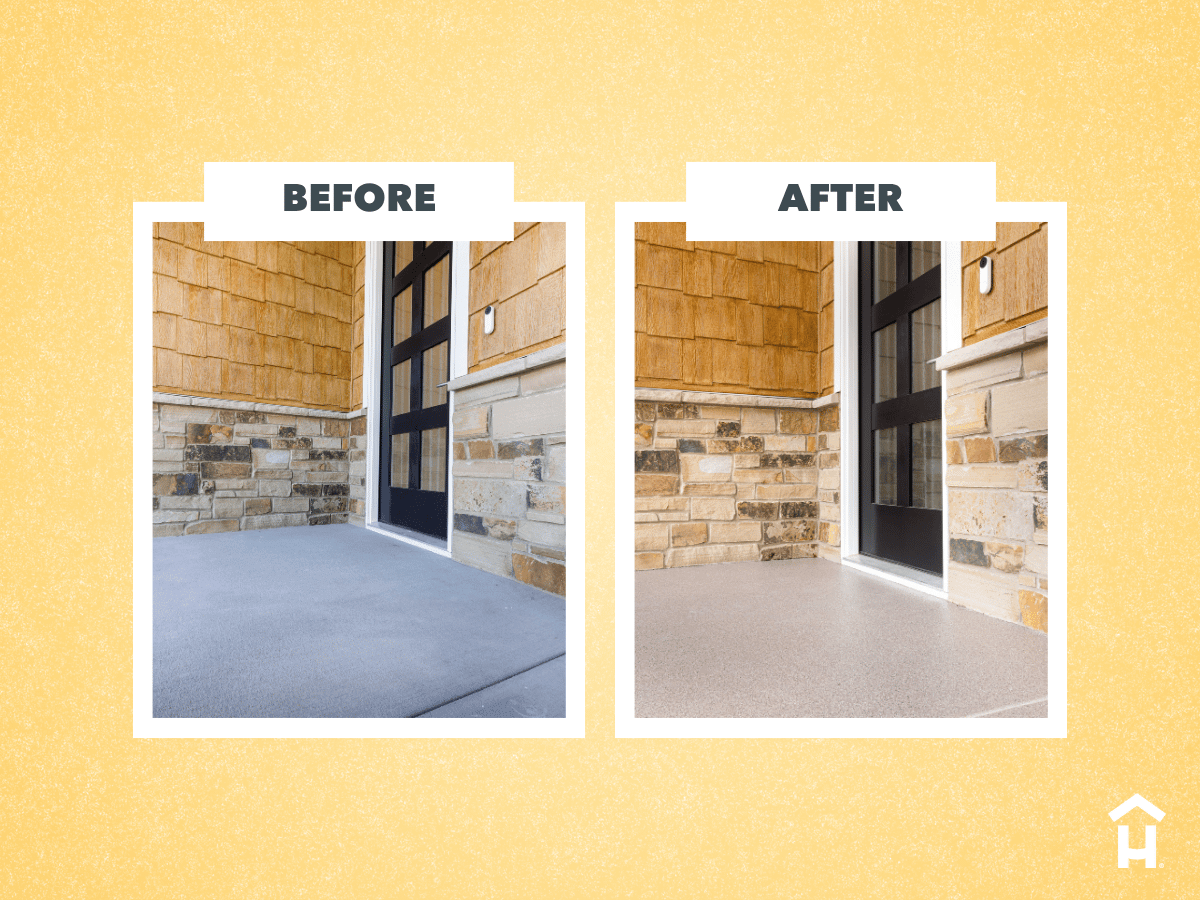
Initial Cost vs. Long-Term Value
Homeowners often choose DIY garage floor coating kits instead of professional installation due to the initial cost difference. A do-it-yourself approach can keep costs down in the short term, but a garage floor coating’s lifetime value depends in large part on its ability to create a durable, long-lasting finish. DIY kits trim costs, but they also compromise on prep work, repairs and quality:
- No industrial diamond grinding
- Minimal or no crack repair
- No moisture testing
- Thinner, cheaper materials
- Long cure times that leave the floor vulnerable during drying
Because DIY work doesn’t adequately prepare the concrete for adhesion, these coatings often peel, chip or show hot-tire pickup within months or years. When that happens, the only option is to strip and redo the entire floor, which adds more cost and time than a professional installation would have required in the first place.
Professional, trained teams add value by using specialized equipment to complete a multilayered application: base coat, full-broadcast flake and top coat. They start with full diamond grinding, concrete moisture testing and repair to create a floor that bonds properly, resists peeling and holds up to daily use. Rather than redoing your garage every few years, you’ll get a new floor that comes with a written warranty and reduces the lifetime cost of ownership.
What Should Be Included in a Garage Floor Coating Estimate?
Are garage floor coatings worth it? The answer to that question can be found in your quote. A comprehensive garage floor coating estimate should lay out the scope of work and the materials that are necessary to prevent peeling, cracking and premature failure.
Even the most durable garage floor coating is only as strong as the prep and materials behind it. An estimate that doesn’t include grinding, repairs or application of multiple layers will look cheaper at first glance, but it will fail to deliver the lasting quality you deserve. A complete, itemized estimate is the only way to compare apples to apples and understand whether a quote reflects rigorous installation standards or a shortcut that won’t meet your expectations.
Here’s a homeowner-friendly checklist of what a complete, professional garage floor coating estimate should include.
- Diamond grinding: Industrial grinding opens the concrete so the coating can bond. This building block of a durable floor requires specialized tools and training, so it isn’t an option with do-it-yourself garage floor coating kits.
- Crack, pit and spall repair: Skipping this step results in telegraphing, peeling and premature failure.
- Base coat: The first layer that bonds to the concrete and supports the system.
- Full-broadcast flake: Flake adds texture, masks imperfections and increases durability.
- Polyaspartic top coat: The protective layer that seals the flake, resists UV damage and eliminates hot-tire pickup.
- Stem walls (if applicable): Coating stem or foundation walls adds material and labor, so look for it listed as a line item.
- Cleanup: Our professional crews leave every garage tidy and ready to use.
- Written warranty: A warranty is part of the value you’ll pay for and confirms that the installer stands behind their work.
How Hello Garage of North Pittsburgh Prepares Your Estimate
When you search for garage floor coating cost North Pittsburgh or professional garage floor coating, you want real answers, not guesses. Your estimate from Hello Garage of North Pittsburgh will take place in person, with a trained flooring specialist who will assess your garage, explain the process in detail and give you an accurate price based on the work your floor needs and the finish you choose.
Your Design Consultant will conduct a thorough assessment of your garage, including:
- Measuring your garage
- Examining your concrete
- Testing moisture levels
- Sharing finish samples
- Discussing add-on options
- Providing your price and installation date
FAQs
Get an Accurate Quote for Your North Pittsburgh Garage
Your garage floor coating cost in North Pittsburgh will be unique to your garage. Every garage is different, and factors such as size, layout, concrete condition, moisture levels and finish choices will all impact the scope of work. The most accurate way to determine your project cost is to have your floor assessed in person.
Hello Garage of North Pittsburgh doesn’t use aggressive sales tactics and won’t pressure you into making a decision. Our Design Consultants will measure your space, inspect the concrete’s condition, check moisture, show you finish samples and confirm your project price and installation date before they leave. It’s the easiest way to get a real number for your garage. Book a free garage floor estimate today!
