
If you’ve been researching garage floor coating costs, you’ve almost certainly come across wildly different numbers, which can slow down your decision-making process. Factors that affect the final price tag include your selected coating material, your garage’s size and condition and the required preparation and repairs.
Rather than relying on rough guesses or incomplete information, the most useful thing we can do is walk you through what elements a garage floor coating estimate should include. After reviewing our garage floor coating pricing guide, you’ll have the knowledge you need to objectively review any quote you receive and understand why two nearly identical garages can have very different project costs.
This page explains cost drivers such as labor and prep, the presence of moisture in the concrete slab, coating materials and finish options, so you can clearly read your estimate and decide whether it’s fairly priced.
Because every garage is unique, the only way to get an accurate number is by setting up a free estimate at your home. During that visit, your local Hello Garage of Omaha flooring specialist will:
- Examine your concrete
- Identify any repairs or prep work needed
- Measure moisture levels
- Discuss coating and finish options
- Explain the elements that determine your exact project price
- Lock in your installation date on the spot
What Determines the Cost of a Garage Floor Coating?
Many homeowners searching for garage floor coating price, cost to install epoxy garage floor or garage floor epoxy installation cost will quickly realize that estimates are all over the map. The truth is that the coating is only one component of the project. Other costs include the labor, surface preparation and repairs needed to make a floor durable, level and ready for years of use.
A professionally installed garage floor takes time, skill and specialized equipment. That’s why two quotes for the same garage can look drastically different—one installer may include full prep and repair work, while another may leave out steps that seriously affect durability.
The primary elements of any garage floor coating estimate should include the following.
- Materials: The coating you choose (epoxy, polyurea, blends or polyaspartic) will affect your floor’s longevity, UV resistance and performance.
- Labor: Installation is a major portion of the cost. Grinding, repairs, moisture mitigation and multilayer application require the expertise of skilled technicians.
- Surface prep: Preliminary preparation is essential. Grinding, leveling and cleaning ensure the coating bonds to the concrete instead of peeling or cracking.
- Concrete repairs: Addressing cracks, pitting, spalling and uneven slabs will add time and materials to the project.
- Extras and add-ons: Coating stem walls, stairs or the exterior apron, choosing premium flake blends or adding moisture barriers can increase the scope of work.
A garage floor coating is only as durable as the surface under it. Prep and repair work often make up a large part of the project because they determine whether the coating will last for years or fail within months. When comparing quotes, bear in mind that a lower number isn’t automatically the better value if it reflects less of the work your floor needs.
A thorough quote should include these elements:
- Garage size
- The condition of your slab
- Surface prep
- Crack repair and resurfacing
- Moisture checks
- Coating type and how many layers are necessary to reach your desired results
- Finish options
- The installation crew’s expertise and experience
The Size and Layout of Your Garage
Size is naturally the first thing you’d expect to drive your garage floor coating price. A one-car garage will of course need less material and labor than a three-car garage. However, size isn’t the only thing that matters. Two garages with identical square footage can still have completely different layouts, obstacles and required prep work.
Every garage floor coating is a custom project, and certain features will add to the time, materials and prep needed to complete the project. Quotes from two separate companies will look nothing alike if one installer accounts for all the detail work your space requires and the other does not.
- Steps or stair treads: Coating steps calls for additional grinding, vertical-surface application and detail work.
- Stem or foundation walls: Extending the coating up the walls adds materials and labor.
- Exterior apron: Coating the apron outside the garage will bring weather considerations and additional prep.
- Floor drains: Installers must take care around drains to preserve the proper slope and drainage.
- Odd shapes or tight corners: Angled walls, alcoves or storage nooks call for more precision and time.
Your Concrete’s Condition
By their nature, coatings bond to the concrete slab. That means installers must repair cracks, pitting, spalling, uneven areas or set-in stains before beginning garage floor resurfacing. The extra time, materials and labor associated with these repairs will affect your final concrete coating garage floor cost. A floor that is still in decent shape may only need grinding and minor patching, while a damaged slab may require substantial repair work or even resurfacing.
Here’s a breakdown concrete issues that may affect your estimate.
Repairing Cracks and Spalling
Cracks, spalling and pitting are common in garage slabs, particularly in older concrete and climates with frequent freeze-thaw cycles. Professional installers use industrial grinders, crack-filling compounds and polymer repair materials to rebuild damaged areas and give the coating a solid, long-lasting foundation.
Garage floor crack repair is vital because:
- Coatings follow the surface beneath them. Unrepaired cracks will become visible in the coating.
- Unrepaired damage compromises adhesion. A coating can’t bond correctly to crumbling or unstable concrete.
- Skipping repairs causes premature failure. Cracks will expand as spalling spreads and the coating starts to peel or chip.
When Resurfacing Is Necessary
Garage floor resurfacing creates a new, even surface for the coating to bond to, but it also adds to the scope of work. Your installation crew will suggest this if:
- Big sections of the slab are crumbling or flaking.
- Deep pitting covers a large part of the floor.
- The surface is seriously uneven.
- Old coatings or paint have seriously damaged the concrete.
- Moisture intrusion has damaged the slab.
Our installation process includes industrial grinders, crack‑filling compounds and polymer repair materials to restore damaged areas and create a stable, durable foundation for the coating. Before booking your estimate, take a quick walk through your garage and look for hairline or wide cracks, pitting, divots, flaking concrete, oil, paint or chemical stains, uneven or sunken areas and old, failing coatings. By documenting these issues ahead of time, you can gauge whether your project may involve repair or resurfacing work.
Surface Prep: The Step That Determines the Success of a Coating
Why do some coatings last for many years, while others start peeling within months? Surface preparation is almost always the pivotal factor. Garage floor prep for epoxy is critical for long-term durability, and it also affects your bottom-line price tag.
Since a coating can only bond thoroughly to clean, intact concrete, Hello Garage of Omaha’s professional installers use industrial diamond grinders to prep the slab. Diamond grinding removes surface contaminants, evens out imperfections and opens “pores” in the concrete so the coating can achieve a permanent bond. It often makes up a large portion of the project cost because it takes specialized equipment, trained technicians and time.
Stripping an Old Coating
If your garage already has epoxy, paint or a failing DIY coating, your installation team must strip it off entirely before beginning your upgrade. These tasks will add time and labor, but they are vital for your floor’s performance.
- Strip away all loose or peeling material
- Grind back to clean, bare concrete
- Address damage caused by the previous coating
- Reopen the surface so the new coating can bond
A new coating applied over old paint or failing epoxy won’t bond correctly. Instead, it will lift, bubble or chip as the underlying layer continues to break down. You may ultimately be dissatisfied with your long-term results if you choose an installer that quotes you a lower price, because skipping these steps often results in epoxy garage floor peeling.
Slab Moisture
Concrete may look solid, but it’s naturally porous, which allows moisture to travel upward through the slab. If that moisture reaches the surface after you have your garage floor coated, it can cause bubbling, lifting or peeling.
Professional installers will run a concrete moisture test using industry standard methods to confirm whether the slab is dry enough for the coating to adhere properly. They may recommend extra prep to protect your floor long-term, such as adding a moisture barrier to prevent premature coating failure.
Before your estimate, look for these signs that may point to the presence of excess moisture:
- Dark spots that never fully dry
- A white, powdery residue called efflorescence
- Damp, musty odors
- Spots where old paint or epoxy has bubbled or lifted
Coating Type: Epoxy vs. Polyurea vs. Polyaspartic
Comparing epoxy garage floor costs, polyurea garage floor coating costs and polyaspartic garage floor coating costs can be tricky if you don’t know the differences between these materials. Some of the confusion comes from the fact that many people use “epoxy” as a generic term to describe any garage floor coating, though that’s technically not accurate.
Here’s a quick breakdown of each coating type and how it affects your project cost, installation experience, durability and long-term value.
Epoxy
Epoxy is the coating material people are most familiar with. It’s often available at a lower up-front cost, but it comes with drawbacks you may notice within only a few years of coating your garage floor:
- A longer cure time, which means your project will take longer
- More likely to peel, especially if installers skip essential preparation
- Hot-tire pickup is common (tires soften when hot and pull epoxy off the floor)
- UV rays will cause yellowing over time, especially in sun-filled garages
- May fail sooner than expected, which will increase your long-term cost
Polyurea
Polyurea is a step up from epoxy, but its quality can vary greatly depending on the product and installer. It can achieve good results when used correctly, but not all installation techs use high-quality formulations.
- Cures quickly, which cuts downtime
- More flexible than epoxy, resisting cracking
- Some formulas are highly prone to UV damage
- Often a strong base coat, but not always ideal as a full system
Polyaspartic
Polyaspartic epoxy alternative is the premium option and the material Hello Garage of Omaha exclusively installs because it offers the strongest combination of long-term durability and lowest maintenance. While it requires a higher initial investment, it resists hot-tire pickup, is 100% UV-resistant and comes with a 15-year transferable warranty. Originally created for heavy-duty industrial applications, this polyurea floor alternative installs in as little as one day and is the go-to choice for homeowners who want a long-lasting improvement.
Finishes and Customization
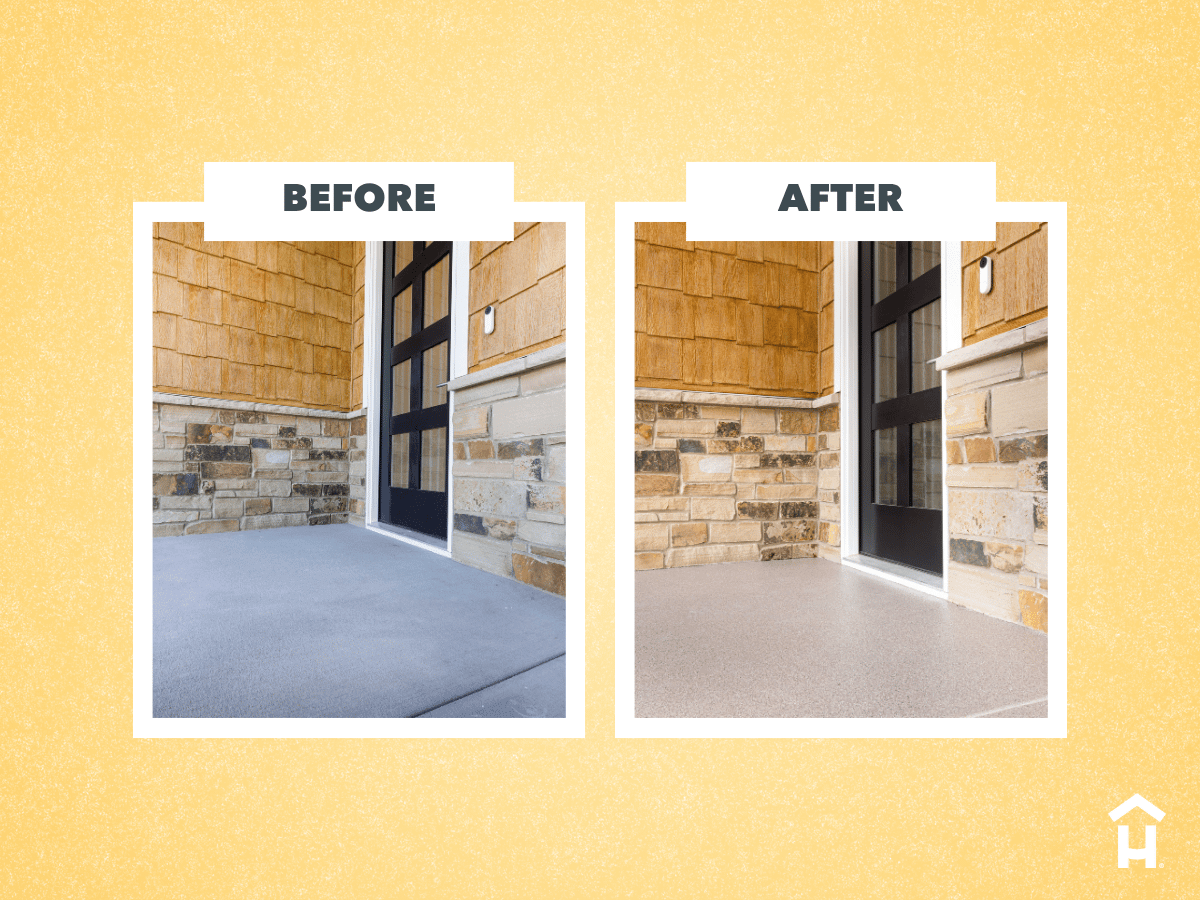
Flake blends add texture, mask imperfections and create a slip-resistant surface for your garage floor. Each blend uses different flake combinations and coverage levels, which can change the amount of material needed for your project.
Polyaspartic flooring is durable and customizable, giving you a polished, full-coverage finish that fits your style and stands up to real-world use. Hello Garage of Omaha offers curated flake garage floor options across three style families.
- Classic: Clean, classic blends that work well in most garages
- Granite: Bold, high-contrast mixes that imitate natural stone
- Sandstone: Warm, earthy tones that warm up the look of the space
Flake coverage impacts the look and installation process. Full-broadcast flake creates a uniform, durable surface and conceals minor imperfections, but it requires more product and can lengthen the installation time. Partial‑broadcast systems use less material but don’t offer the same durability or visual consistency.
Polyaspartic top coat seals the flake layer and provides UV stability, ensuring the color you choose remains true over time. It also influences the gloss level, scratch and chemical resistance, and long-term durability.
Photos only tell part of the story. During your free on-site estimate, you’ll have the chance to see physical samples of garage floor finish and color options, so you can feel sure that your results will look polished and perform beautifully.
Up-Front Cost vs. Lifetime Value
Homeowners often choose DIY garage floor coating kits rather than professional installation due to the initial cost difference. A do-it-yourself approach can be cheaper in the short term, but a garage floor coating’s lifetime value depends mostly on its ability to create a durable, long-lasting finish. DIY kits lower costs, but they also compromise on prep work, repairs and quality:
- No industrial diamond grinding
- Minimal or no crack repair
- No moisture testing
- Thinner, lower-quality materials
- Long cure times that leave the floor vulnerable during drying
Since DIY work doesn’t adequately prepare the concrete for adhesion, these coatings often peel, chip or show hot-tire pickup within months or years. When that happens, the only solution is to strip and redo the entire floor, which adds more cost and time than a professional installation would have required in the first place.
Skilled, qualified teams add value by using specialized equipment to complete a multilayered application: base coat, full-broadcast flake and top coat. They begin with full diamond grinding, concrete moisture testing and repair to create a floor that bonds properly, resists peeling and stands up to daily use. Rather than redoing your garage every few years, you’ll get a new floor that comes with a written warranty and cuts the lifetime cost of ownership.
What Should Be Included in a Garage Floor Coating Estimate?
Are garage floor coatings worth it? The answer to that question lies in your quote. A comprehensive garage floor coating estimate should detail the scope of work and the materials that are required to prevent peeling, cracking and premature failure.
Even the most durable garage floor coating is only as strong as the prep and materials behind it. An estimate that doesn’t include grinding, repairs or application of multiple layers will look cheaper at first glance, but it will fail to provide the lasting quality you deserve. A detailed, itemized estimate is the only way to compare apples to apples and understand whether a quote reflects rigorous installation standards or a shortcut that won’t meet your expectations.
Here’s a homeowner-friendly checklist of what a complete, professional garage floor coating estimate should include.
- Diamond grinding: Industrial grinding opens the concrete so the coating can bond. This cornerstone of a durable floor requires specific tools and training, so it isn’t an option in do-it-yourself garage floor coating kits.
- Crack, pit and spall repair: Skipping this step leads to telegraphing, peeling and early failure.
- Base coat: The first layer that bonds to the concrete and supports the system.
- Full-broadcast flake: Flake adds texture, masks imperfections and enhances durability.
- Polyaspartic top coat: The protective layer that seals the flake, resists UV damage and eliminates hot-tire pickup.
- Stem walls (if applicable): Coating stem or foundation walls adds material and labor, so look for it as a line item.
- Cleanup: Our professional crews leave every garage clean and ready to use.
- Written warranty: A warranty is part of the value you’ll pay for and confirms that the installer stands behind their work.
How Hello Garage of Omaha Creates Your Estimate
When you search for garage floor coating cost Omaha or professional garage floor coating, you want clarity, not speculation. Your estimate from Hello Garage of Omaha will take place in person, with a trained flooring specialist who will inspect your garage, explain the process step by step and give you an accurate price based on the work your floor needs and the finish you select.
Your Design Consultant will carry out a thorough assessment of your garage, including:
- Taking measurements
- Evaluating your concrete
- Checking moisture levels
- Showing finish samples
- Explaining add-on options
- Providing your price and installation date
FAQs
Get an Exact Price for Your Omaha Garage
Your garage floor coating cost in Omaha will be unique to your garage. Every garage is different, and factors such as size, layout, concrete condition, moisture levels and finish choices will all influence the scope of work. The most accurate way to understand your project cost is to have your floor inspected in person.
Hello Garage of Omaha doesn’t use high-pressure sales tactics and won’t pressure you into deciding. Our Design Consultants will measure your space, inspect the concrete’s condition, check moisture, show you finish samples and confirm your project price and installation date before they leave. It’s the most straightforward way to get a real number for your garage. Book a free garage floor estimate today!